
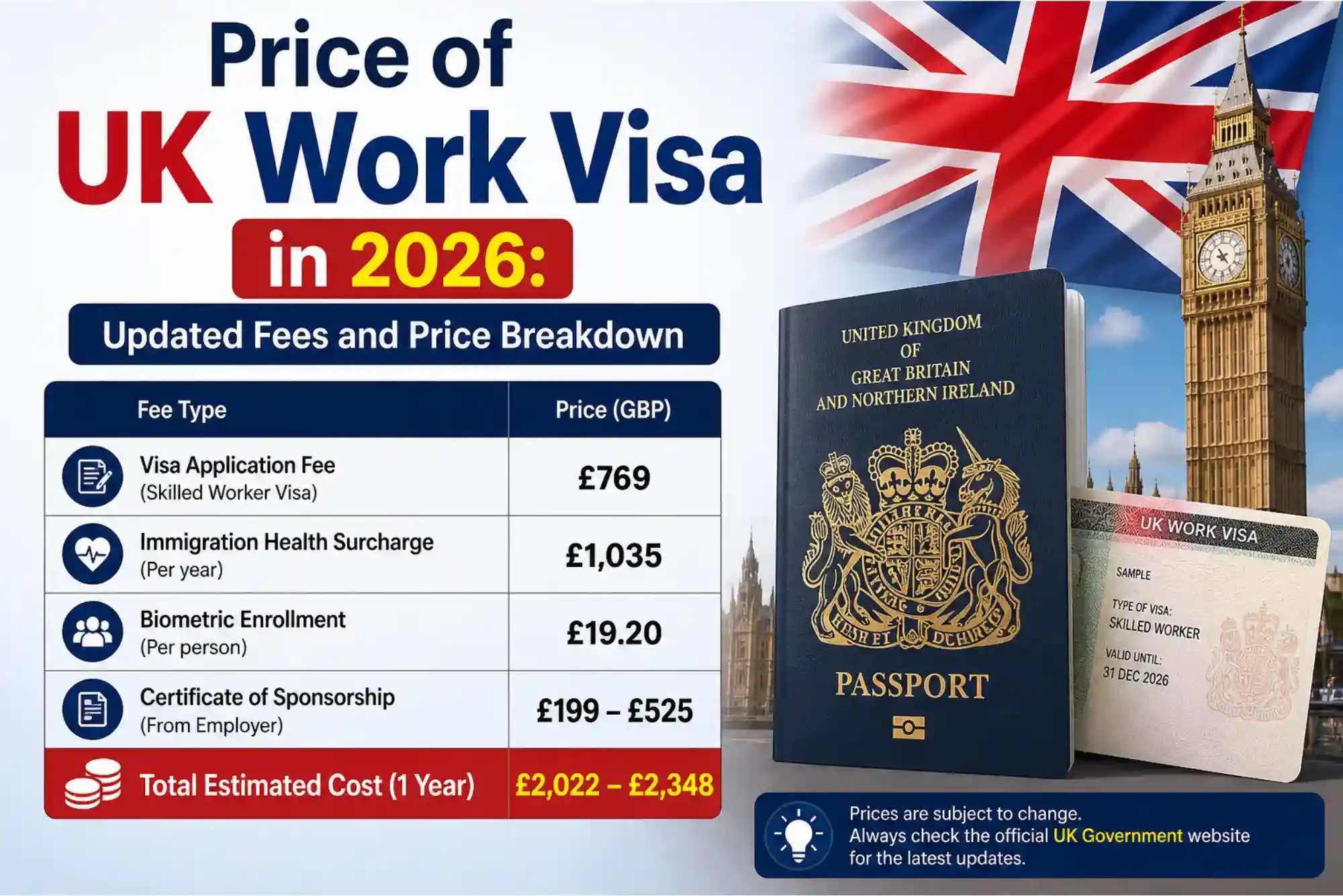
This comprehensive guide provides a complete breakdown of the UK work visa price in 2026, including government fees, additional costs, and a historical price table from 2012 to 2026. Whether you are applying for the Skilled Worker visa or exploring employer-sponsored opportunities, this article will help you plan your budget with confidence.
Understanding the UK Work Visa System
The UK primarily issues work visas under the Skilled Worker route, which replaced the Tier 2 (General) visa. This visa allows foreign nationals to work for approved employers in eligible roles, provided they meet salary thresholds and skill requirements.
The total cost of a UK work visa includes:
- Application fee
- Immigration Health Surcharge (IHS)
- Biometric enrollment fee
- Optional priority processing charges
UK Work Visa Price in 2026 (Latest Fees)
As of 2026, the UK government has adjusted visa fees in response to economic conditions and administrative costs. Below is a general overview of the latest charges:
Standard Application Fees
- Up to 3 years: £719 – £827
- More than 3 years: £1,420 – £1,636
Immigration Health Surcharge (IHS)
- £1,035 per year (mandatory)
Additional Costs
- Biometric fee: £19.20
- Priority service: £250 – £500 (optional)
For a typical 5-year Skilled Worker visa, applicants can expect to pay between £6,000 and £8,000 in total, depending on processing speed and additional services.
Historical Price Table: UK Work Visa Fees (2012–2026)
To better understand how costs have evolved, the table below highlights the approximate UK work visa fees over the last 15 years:
| Year | Visa Type | Application Fee (Approx) | IHS (if applicable) | Total Estimated Cost |
|---|---|---|---|---|
| 2012 | Tier 2 Work Visa | £480 | Not Applicable | £480 |
| 2013 | Tier 2 Work Visa | £494 | Not Applicable | £494 |
| 2014 | Tier 2 Work Visa | £564 | Not Applicable | £564 |
| 2015 | Tier 2 Work Visa | £574 | £200/year introduced | £774+ |
| 2016 | Tier 2 Work Visa | £587 | £200/year | £787+ |
| 2017 | Tier 2 Work Visa | £610 | £200/year | £810+ |
| 2018 | Tier 2 Work Visa | £610 | £400/year | £1,010+ |
| 2019 | Tier 2 Work Visa | £610 | £400/year | £1,010+ |
| 2020 | Skilled Worker Visa | £610 – £1,220 | £624/year | £1,500+ |
| 2021 | Skilled Worker Visa | £625 – £1,423 | £624/year | £1,600+ |
| 2022 | Skilled Worker Visa | £625 – £1,423 | £624/year | £1,800+ |
| 2023 | Skilled Worker Visa | £719 – £1,500 | £624/year | £2,000+ |
| 2024 | Skilled Worker Visa | £719 – £1,500 | £1,035/year | £3,000+ |
| 2025 | Skilled Worker Visa | £769 – £1,550 | £1,035/year | £4,000+ |
| 2026 | Skilled Worker Visa | £827 – £1,636 | £1,035/year | £6,000 – £8,000 |
Why UK Work Visa Fees Have Increased
Several factors have contributed to the steady rise in UK visa costs:
- Expansion of public healthcare funding via IHS
- Administrative and processing improvements
- Post-Brexit immigration policy changes
- Inflation and currency fluctuations
The introduction and subsequent increase of the Immigration Health Surcharge has had the biggest impact, often doubling the total cost for long-term visas.
Hidden Costs Applicants Should Consider
Beyond official fees, applicants often encounter additional expenses that can significantly affect their budget:
- English language test (IELTS or equivalent)
- Document translation and notarization
- Travel costs to visa centers
- Legal or consultancy fees
These costs can add £500 to £2,000 depending on your situation.
How UK Work Visa Costs Compare Globally
Compared to other countries, the UK remains one of the more expensive destinations for work visas. For example, if you compare with
US visa pricing structures, the UK’s healthcare surcharge makes it significantly more costly for long-term stays.
Similarly, regional options such as
Azerbaijan visa costs or
Oman work visa pricing
are generally lower, making them attractive alternatives for budget-conscious applicants.
Tips to Reduce Your UK Work Visa Expenses
Choose the Right Visa Duration
Applying for a shorter visa initially can reduce upfront costs, especially if you’re unsure about long-term plans.
Employer Sponsorship Benefits
Some UK employers cover visa fees or healthcare surcharges as part of relocation packages. Always negotiate this during job discussions.
Avoid Unnecessary Priority Fees
Standard processing is often sufficient unless your situation requires urgent travel.
Future Outlook: Will UK Visa Fees Continue to Rise?
Based on historical trends, it is likely that UK visa costs will continue to increase gradually. Government policies increasingly rely on visa fees to fund public services, especially healthcare.
However, there may also be targeted discounts or exemptions in high-demand sectors such as healthcare, IT, and engineering.
Final Thoughts
The UK work visa price in 2026 reflects a significant increase compared to previous years, largely driven by healthcare surcharges and policy changes. While the cost may seem high, the long-term benefits of working in the UK—including career growth, global exposure, and access to world-class infrastructure—often justify the investment.
By understanding the full cost structure and planning ahead, applicants can avoid unexpected expenses and make informed decisions about their international career journey.
Related Reading: Price Esta Visa in 2026: Updated Fees and Price Breakdown
Related Reading: Pros & Cons of Using a Textile Shrinkage Calculator
Related Reading: How to Pack Smart for a Hot-Climate Hiking Day