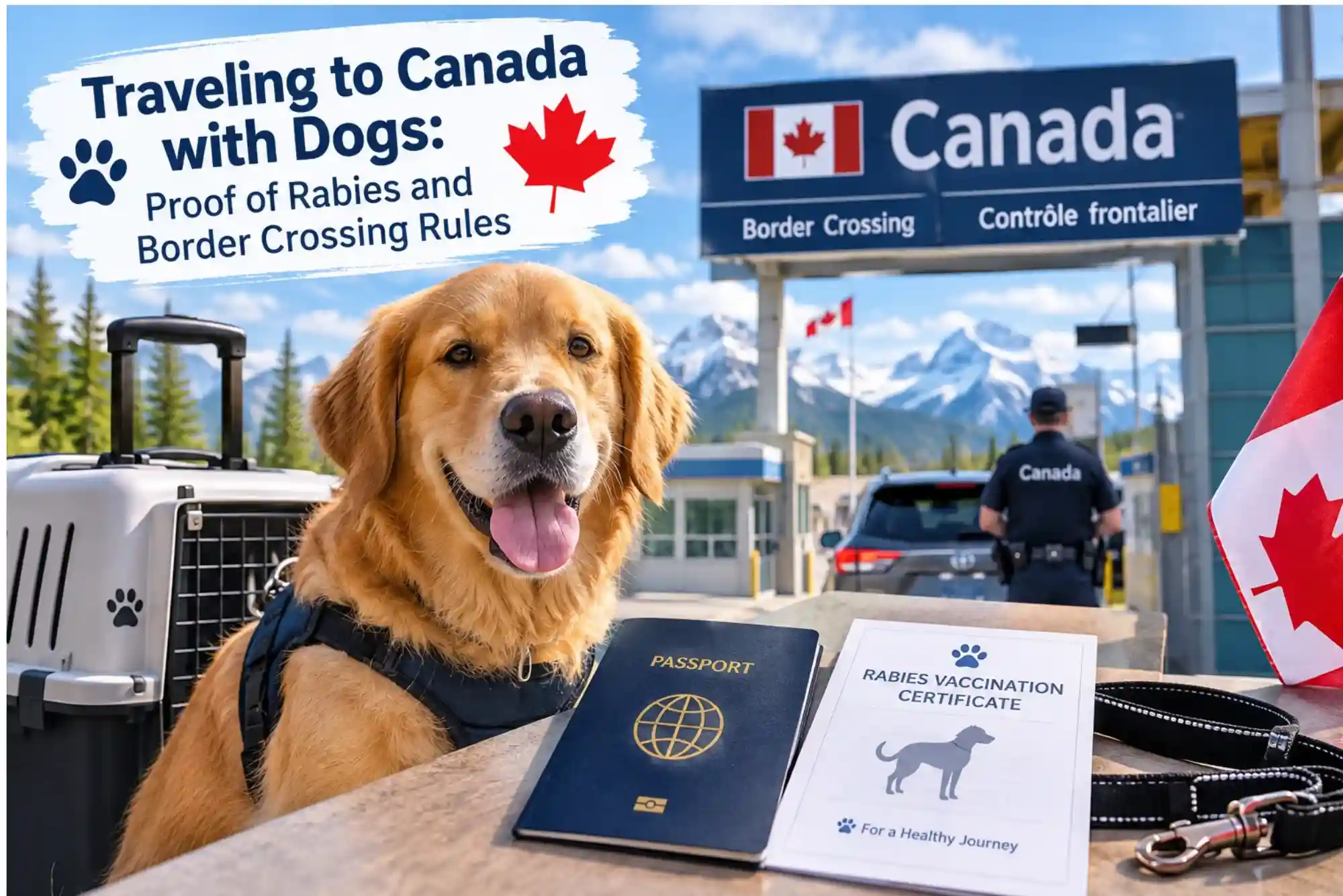
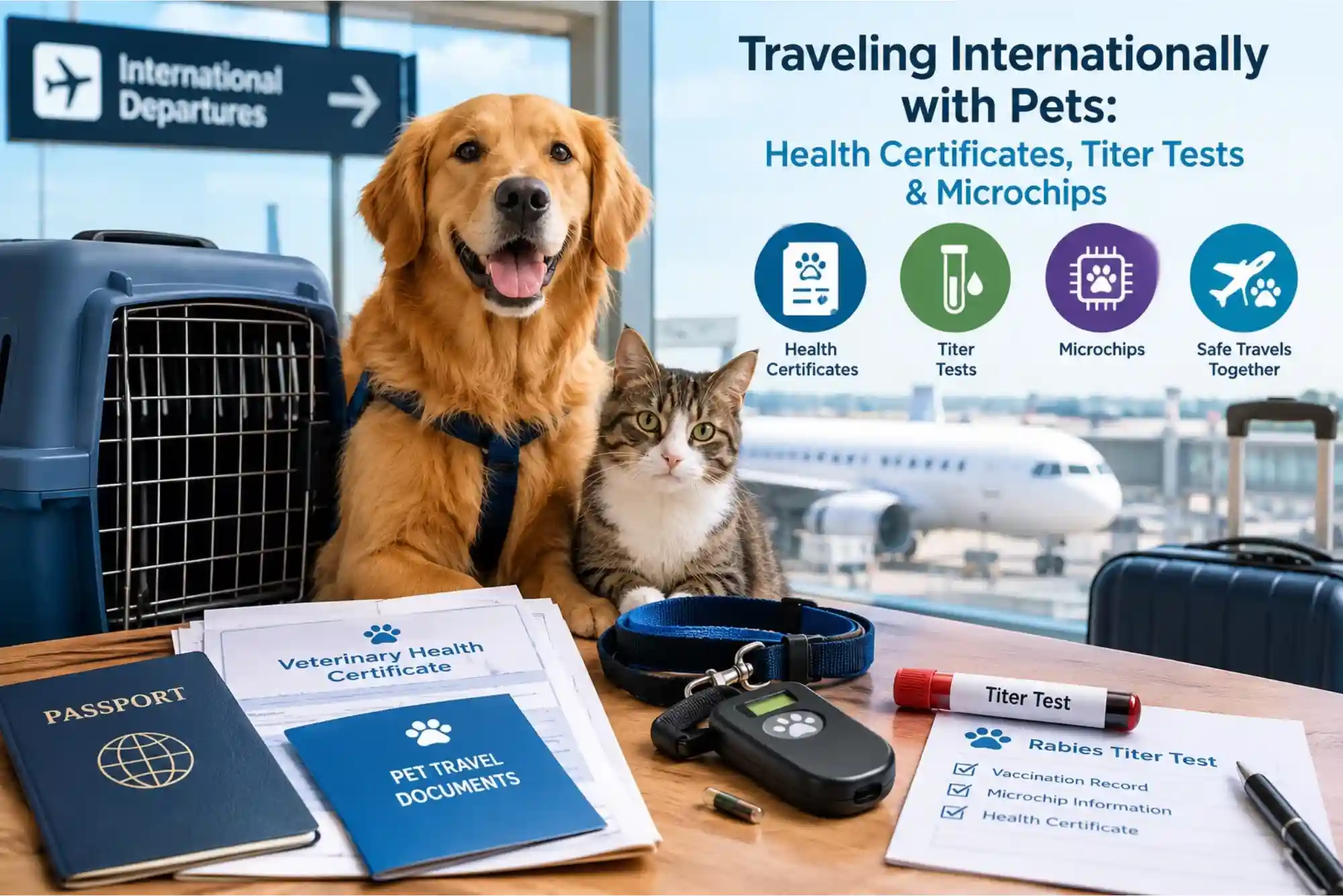
Traveling Internationally with Pets: Health Certificates, Titer Tests & Microchips
International travel with a pet can be an exciting experience, but crossing international borders with a dog, cat, or other companion animal requires much more preparation than simply booking a flight and purchasing a suitable carrier. Every country has its own rules for bringing animals across its borders, and these requirements can include health certificates, vaccinations, rabies antibody or titer testing, microchip identification, parasite treatments, import permits, and specific timelines that must be followed carefully.
For pet owners, the most important part of international travel preparation is understanding that many requirements are time-sensitive. A vaccination may need to be completed a certain number of days before arrival, a microchip may need to be implanted before a particular vaccination is administered, and a titer test may need to be performed and processed by an approved laboratory. Missing one deadline can potentially delay a pet’s journey or create problems at the destination border.
Before making travel arrangements, pet owners should research the destination country’s current import requirements and determine whether additional documentation is necessary. A useful starting point for understanding international pet travel planning is Travels Flax’s international pet travel guide, which can help travelers understand the broader process involved in preparing a pet for an international journey.
Understanding International Pet Travel Requirements
International pet travel regulations are designed primarily to protect animal health and prevent the spread of infectious diseases between countries. Rabies is one of the most important diseases considered in international pet movement, which is why rabies vaccination and related documentation are common requirements.
However, rabies vaccination is only one part of the process. Depending on the destination, authorities may require a government-approved health certificate, proof of vaccination, microchip identification, a rabies antibody titer test, parasite treatment records, import permits, or quarantine arrangements.
The exact requirements can vary according to the country of departure, destination country, transit countries, species of animal, and sometimes even the age of the pet. Dogs and cats are the most commonly transported companion animals, but regulations for birds, rabbits, reptiles, and other animals can be significantly different.

Because requirements can change, travelers should verify information with the destination country’s official government or veterinary authority before starting the preparation process. Airline requirements should also be checked separately because an animal may satisfy government entry requirements while still failing to meet an airline’s transportation rules.
Why Microchips Are Important for International Pet Travel
A microchip is one of the most important forms of identification for a pet traveling internationally. Unlike a collar or identification tag, a microchip is implanted under the animal’s skin and provides a permanent identification method that can be scanned by compatible equipment.
Many countries require dogs and cats to have an internationally readable microchip before certain vaccination or testing steps are considered valid. This means that the order of preparation can matter.
For example, if a destination requires the pet to be microchipped before its rabies vaccination, receiving the vaccination first could create a documentation problem. The pet may technically have received a valid vaccination, but the destination authority could require evidence that the animal was identified by microchip before that vaccination was administered.
This is why pet owners should not treat microchipping as an optional final step before departure. It should be incorporated into the travel preparation timeline from the beginning.
The microchip number should appear consistently across veterinary records, vaccination certificates, laboratory reports, health certificates, and other travel documents. Even a small discrepancy in the identification number can create confusion during document verification.
Pet owners should also make sure that their contact information associated with the microchip is current where applicable. A microchip itself does not function like a GPS tracker. It generally provides an identification number that can be scanned and connected to registration information.
Rabies Vaccination and International Travel
Rabies vaccination is one of the most frequently required elements of international pet travel. Countries use vaccination requirements to reduce the risk of rabies being introduced through imported animals.
The rules can vary considerably. Some destinations may accept a standard rabies vaccination if specific conditions are met, while others may require a waiting period after vaccination before the pet can enter. Certain destinations may also require additional testing to demonstrate that the vaccination produced an adequate antibody response.
The timing of vaccination is therefore extremely important. Pet owners should avoid waiting until the week before a trip to investigate these requirements.
In many cases, the pet must already have a valid microchip before the qualifying rabies vaccination is administered. The vaccination certificate should contain accurate information about the animal, including its identification details, vaccine information, date of administration, and validity period.
Veterinary records should be kept carefully because they may be required when preparing the official health certificate or applying for an import permit.
What Is a Rabies Titer Test?
A rabies titer test, also called a rabies antibody test, is a laboratory test used to measure the level of antibodies against rabies in an animal’s blood.
The test is different from a rabies vaccination. The vaccination exposes the animal’s immune system to the vaccine and helps stimulate an immune response, while the titer test measures the resulting antibody level.
Some countries require a satisfactory rabies antibody test for pets arriving from certain countries or regions. The requirement may depend on the rabies risk classification of the country from which the pet is traveling.
The blood sample generally needs to be collected after the qualifying rabies vaccination and then submitted to a laboratory recognized or approved by the relevant authority. The destination country may specify which laboratories are acceptable.
This is one of the reasons international pet travel can require months of preparation. A pet owner may need to complete microchipping, vaccination, blood sampling, laboratory testing, waiting periods, and certification before the animal is legally eligible to enter the destination country.
Why Titer Test Timing Matters
Timing is one of the most frequently overlooked aspects of international pet travel.
A titer test generally cannot be performed before the required vaccination stage. In addition, some countries impose a waiting period after a successful antibody test before the pet is permitted to enter.
This means that booking a flight first and investigating the regulations afterward can create unnecessary problems. A traveler may discover that the pet is not yet eligible to enter the destination country on the planned arrival date.
For this reason, responsible planning should begin well before the intended departure date. The owner should establish a timeline showing when the microchip must be implanted, when vaccination must occur, when the blood sample can be taken, when laboratory results are expected, and when the health certificate must be issued.
The exact sequence depends on the destination’s regulations, so the timeline should be based on official requirements rather than a general travel checklist.
Health Certificates for International Pet Travel
A health certificate is another major component of international pet travel documentation. It provides official information about the animal’s health and confirms that the pet has met specified veterinary requirements.
The certificate may need to be completed by an authorized or accredited veterinarian, depending on the country and the type of certificate required. In some situations, the certificate may also need endorsement by a government veterinary authority.
The certificate usually contains information identifying the pet and its owner as well as relevant vaccination and health information. Destination-specific requirements may add further details.
One important consideration is the certificate’s validity period. A health certificate may need to be issued within a particular number of days before arrival or departure. If it is issued too early, it may expire before the pet reaches its destination.
This makes scheduling the veterinary appointment particularly important. Pet owners should not assume that a certificate issued several weeks before departure will automatically remain valid throughout the journey.
What Information Should Match Across Documents?
Consistency is essential when preparing international pet travel paperwork.
The pet’s name, species, breed where required, sex, age or date of birth, microchip number, owner’s information, vaccination details, and other identification information should be recorded accurately.
The microchip number deserves particular attention. A single incorrect digit can cause problems when officials compare the animal’s physical microchip scan with the paperwork.
Owners should carefully review documents as soon as they receive them rather than discovering an error at the airport or border.
Keeping digital copies of important documents can also be useful, although travelers should determine whether the destination requires original documents. Copies should be considered a backup rather than a replacement for officially required paperwork.
Airline Requirements Are Separate From Government Requirements
Meeting a country’s import regulations does not necessarily guarantee that an airline will accept a pet for transportation.
Airlines can have their own policies concerning carrier dimensions, animal size, breed restrictions, temperature limitations, cabin transportation, checked transportation, cargo services, documentation, and booking procedures.
Some airlines may require advance notification or limit the number of pets permitted on a particular flight. Others may have restrictions related to aircraft type or destination.
Pet owners should therefore confirm requirements with the airline after understanding the destination country’s regulations. Both sets of requirements must be satisfied.
Travelers should also consider connecting flights carefully. A pet might meet the requirements of the final destination but face additional rules in a transit country if the animal leaves the airport’s controlled transit area or changes transportation arrangements.
Preparing Your Pet for the Journey
Legal paperwork is only one part of successful international pet travel. The animal also needs to be prepared physically and emotionally for the journey.
A suitable travel carrier should be selected well in advance. The pet should have enough time to become familiar with it before the travel date. Allowing the animal to spend short periods inside the carrier can make the carrier a more familiar environment.
The carrier should meet the airline’s requirements and provide appropriate ventilation, security, and space. The exact requirements depend on whether the pet is traveling in the cabin, as checked baggage where permitted, or through an airline’s cargo service.
Owners should also plan feeding and hydration carefully around the travel schedule. Veterinary advice can be particularly valuable for animals with special needs, older pets, or animals that become highly stressed during transportation.
Sedating a pet solely for air travel should not be approached casually. Any medication or travel-related health decision should be discussed with a veterinarian who understands the animal’s medical history and the circumstances of the journey.
Parasite Treatments and Additional Veterinary Requirements
Some destinations require dogs or cats to receive specific treatments against internal or external parasites before entry. These treatments can have precise timing requirements.
For example, a destination may require a particular parasite treatment to be administered within a specified period before arrival and recorded on the health certificate.
This is another reason travelers should avoid relying on generic internet checklists. A treatment that is required for one country may not be required for another, and the timing can differ.
The veterinarian preparing the pet’s travel documentation should be provided with the destination country and planned travel date so the veterinary team can determine which requirements apply.
Import Permits and Government Approval
Some countries require an import permit before a pet can enter. An import permit is different from a health certificate.
A health certificate generally provides veterinary information about the animal, while an import permit is an authorization from the destination authority allowing the animal to be imported under specified conditions.
Not every destination requires an import permit, but where one is required, the application may need to be completed before travel.
Travelers should confirm whether the permit must be carried in original form, whether it has an expiration date, and whether its conditions must be reflected on the veterinary certificate.
Planning International Pet Travel Months in Advance
One of the most effective ways to reduce problems is to begin planning as early as possible.
A traveler should first identify the destination country’s official pet-import rules. Once the requirements are known, the owner can create a schedule around the animal’s existing vaccination history and the intended departure date.
The process may involve several stages that cannot simply be completed on the same day. Microchipping, vaccination, titer testing, waiting periods, health certification, government endorsement, and airline booking may all need to happen in a specific sequence.
For travelers who frequently move between countries or need detailed guidance on pet transportation, Travels Flax provides a broader resource for international travel planning and pet-related travel information.
The earlier the preparation begins, the more flexibility the owner has if laboratory testing takes longer than expected or if a document needs to be corrected.
Common Mistakes Pet Owners Should Avoid
A common mistake is assuming that a rabies vaccination alone is enough for international travel. While vaccination is an important requirement, some destinations require additional identification, testing, documentation, or waiting periods.
Another mistake is getting the microchip after the qualifying rabies vaccination when the destination requires the opposite sequence. This can affect whether the vaccination is recognized for import purposes.
Waiting until the last minute to obtain the health certificate is another potential problem. Certificates often have strict validity windows, and official endorsement may require additional time.
Pet owners should also avoid assuming that requirements remain unchanged from a previous trip. Regulations can be updated, and a country may change its requirements based on disease-control policies or international agreements.
Finally, travelers should not rely solely on an airline’s website for government entry requirements. Airlines can explain their own transportation policies, but official animal-import rules should be confirmed with the appropriate government authority.
How to Organize Your Pet Travel Documents
A simple document-management system can make international travel much easier.
Pet owners can maintain one physical folder containing the original veterinary records, vaccination certificates, laboratory reports, permits, health certificates, and other official documents. A digital backup can also be stored securely.
Before departure, the owner should compare all documents and make sure the pet’s identification information is consistent.
The microchip number should be checked carefully against the number recorded in the veterinary documents. Vaccination dates should also be reviewed, especially if the destination has minimum waiting periods.
It can also be useful to keep copies of the veterinarian’s contact information and relevant government authority details in case clarification is required during travel.
What Happens When You Arrive?
Upon arrival, the pet and its documents may be inspected by border officials, customs officers, agricultural authorities, or veterinary authorities depending on the destination.
Officials may scan the animal’s microchip and compare the identification number with the documents. They may also verify vaccination records, laboratory results, health certificates, import permits, and other required documentation.
If the destination requires a specific inspection or quarantine process, the pet may need to undergo additional procedures after arrival.
Travelers should therefore keep important documents easily accessible rather than packing them in checked luggage that cannot be reached during the inspection process.
International Pet Travel Requires Attention to Detail
Traveling internationally with a pet is manageable when preparation begins early and the requirements are followed in the correct order. Microchipping, rabies vaccination, titer testing, health certification, and other veterinary requirements all serve different purposes, and each can have specific timing conditions.
The most important principle is to avoid treating international pet travel as a simple airline booking. It is a regulatory process as well as a travel experience.
A successful journey depends on understanding the destination country’s requirements, confirming the rules with official authorities, coordinating with an appropriately qualified veterinarian, and checking airline policies separately.
Pet owners should also build extra time into their plans. Laboratory processing, document corrections, government endorsements, airline procedures, and unexpected administrative delays can all affect the schedule.
Final Thoughts
International travel with pets requires careful preparation, but understanding the major requirements makes the process much easier to manage. Health certificates provide important veterinary documentation, titer tests may demonstrate an adequate rabies antibody response where required, and microchips provide reliable identification that can connect the animal to its travel records.
The most important step is to start early. Requirements can depend on the destination, country of origin, transit route, animal species, vaccination history, and travel date. Because regulations can change, travelers should always verify the current requirements with the relevant government authority and airline before departure.
With proper planning, accurate documentation, appropriate veterinary care, and careful attention to deadlines, pet owners can approach international travel with a much clearer understanding of what is required for their animal’s journey.