Moving cross-country is a major life change, and when you have multiple cats, the process becomes even more important to plan carefully. Cats are creatures of routine, and a long-distance move can expose them to unfamiliar environments, transportation, new sounds, different smells, and changes in their daily schedules. When several cats are traveling together, owners also have to consider their individual personalities, health needs, carrier requirements, feeding schedules, and reactions to travel.
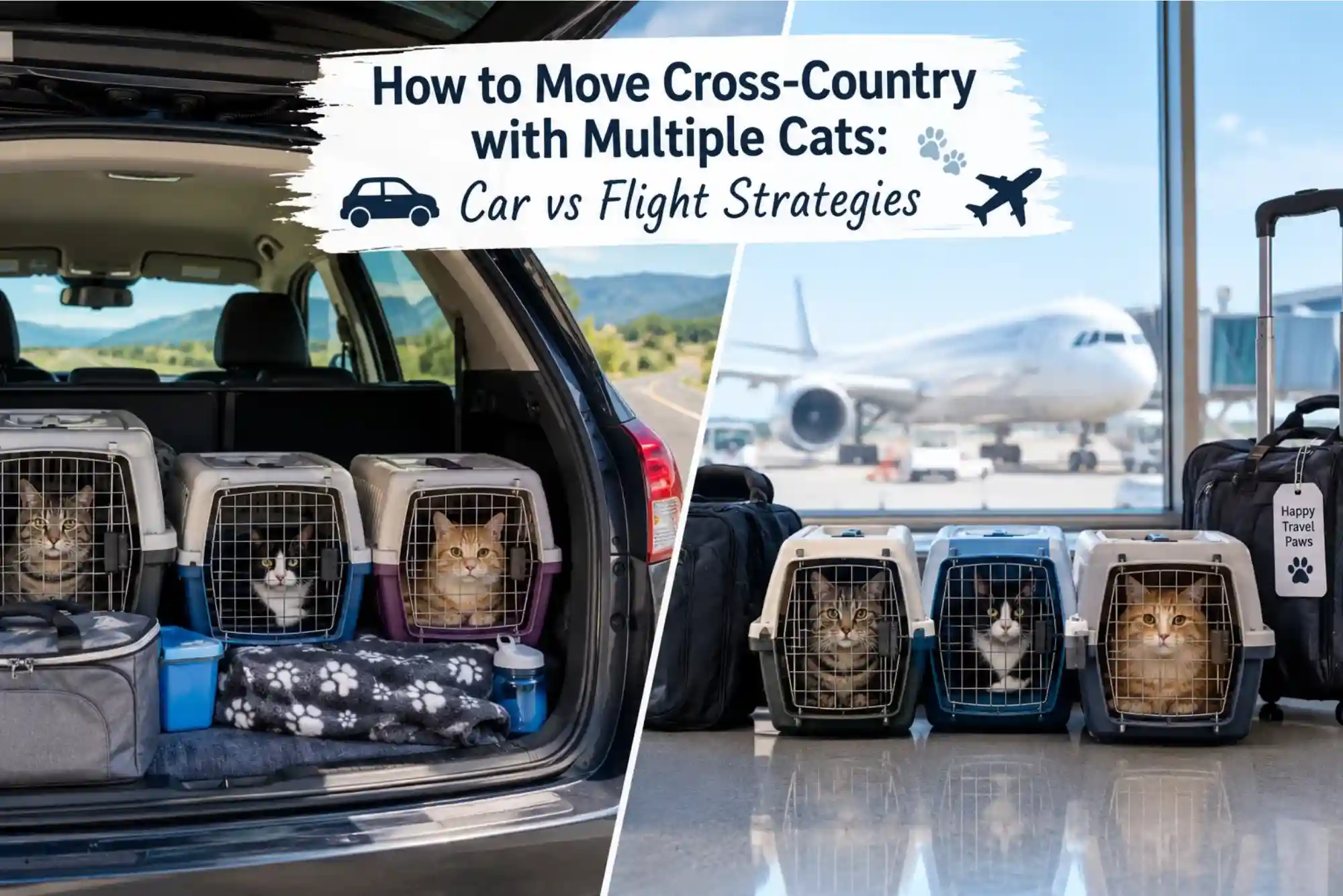
The two most common ways to move cats across the country are by car or by airplane. Both options can work well, but the right choice depends on the distance, the number of cats, their health, their behavior, the available transportation arrangements, and the rules of the airline or destination. A car provides greater control over the journey and allows owners to make stops when necessary, while flying can significantly reduce travel time but introduces additional restrictions and logistical considerations.
For owners preparing for an international or long-distance pet journey, understanding the broader requirements of pet transportation can also be useful. Resources such as international pet travel guidance can help owners become familiar with the planning considerations involved in transporting pets over long distances.
Understanding the Challenges of Moving Multiple Cats
Moving one cat can already require preparation. Moving several cats requires an additional level of organization because each animal may respond differently to travel. One cat may remain calm inside a carrier, while another may become anxious as soon as the carrier appears. A third cat might have a history of motion sickness or become stressed by unfamiliar sounds.
The first step is to understand the individual needs of every cat. Their ages, medical conditions, temperament, feeding habits, and previous travel experiences should all be considered before choosing between driving and flying.
The number of cats also affects the practical side of transportation. Several carriers can take up considerable space in a vehicle, while airlines have specific rules about how many pets can travel in the cabin, how many carriers can be placed under seats, and whether multiple animals can share a carrier. These restrictions can make air travel more complicated for households with multiple cats.

Another challenge is maintaining a sense of security. Cats generally feel safer when they have familiar items around them. Their usual blankets, bedding, small toys, and other familiar-smelling objects can help make the journey less unfamiliar.
Preparing Cats Before a Cross-Country Move
Preparation should begin well before moving day. A sudden introduction to carriers, car travel, or unfamiliar routines can increase stress. Instead, cats should gradually become comfortable with the equipment and processes they will experience during the move.
Carriers should be left in an area where the cats regularly spend time. Rather than using the carrier only when going to the veterinarian, owners can allow their cats to explore it naturally. Placing familiar bedding inside can make the carrier feel more like a safe resting area.
Short practice trips can also be useful for cats traveling by car. The first trips can be brief, allowing the cat to become accustomed to the movement and sounds of a vehicle. The duration can gradually increase as the cat becomes more comfortable.
Cats traveling by plane require similar preparation, but airline-specific requirements should be checked early. Airlines can have different carrier dimensions, pet policies, documentation requirements, and restrictions. Because these policies can change, owners should verify current rules directly with the airline before making final arrangements.
A veterinary appointment before the move can also help identify any health concerns that might affect travel. Owners should discuss the length of the journey, the expected conditions, and any existing medical issues with the veterinarian. If a cat has a history of severe anxiety, motion sickness, or another travel-related problem, professional veterinary guidance is particularly important.
Moving Multiple Cats by Car
For many multi-cat households, traveling by car offers greater flexibility. The owner controls the departure time, route, stops, temperature, and general pace of the journey. This can be especially valuable when traveling with several cats that have different needs.
A car also allows owners to keep the cats together without dealing with airline passenger restrictions. Each cat can have its own appropriately sized carrier, and the carriers can be arranged safely within the vehicle.
The main advantage of driving is control. If one cat becomes uncomfortable, the owner can stop at an appropriate location and assess the situation. If weather conditions change or a particular route becomes difficult, the journey can be adjusted.
However, driving across the country can take many hours or even several days. Long periods inside carriers can be stressful, and owners need to plan carefully for food, water, litter, rest periods, and overnight accommodations.
The vehicle itself should be prepared before departure. Carriers should be secured so they cannot slide or tip during braking or turning. Cats should not be allowed to roam freely inside the vehicle because sudden movement can create safety risks and make it difficult for the driver to maintain control.
A comfortable temperature is also important. Cars can become dangerously hot or cold, particularly when parked. Cats should never be left unattended in a parked vehicle, even for a short period.
Planning Stops During a Cross-Country Drive
A long-distance drive with cats requires a different approach from an ordinary road trip. Human travelers may stop frequently at restaurants, attractions, or rest areas, but cats need a controlled environment that minimizes unnecessary stress.
Before leaving, owners should map out appropriate stopping points and identify pet-friendly accommodations if an overnight stay is required. Having a general route planned in advance reduces last-minute decisions.
Food and water should be handled according to each cat’s normal routine as much as practical. Major changes to feeding schedules can increase digestive problems or anxiety. Owners should also bring enough of the cats’ usual food for the entire trip, plus an additional supply in case the journey takes longer than expected.
Litter management is another important consideration. Portable litter solutions can be useful during long trips, particularly when an overnight stay is involved. Owners should bring familiar litter if possible, because a sudden change in litter type can cause some cats to avoid the litter box.
It is also wise to keep cleaning supplies readily available. Accidents can happen during stressful journeys, and having absorbent materials and suitable cleaning products within reach can make the situation much easier to manage.
Benefits of Driving With Multiple Cats
Driving can be particularly practical for households with several cats because owners can maintain greater control over the environment. The cats can remain in their own familiar carriers, and the owner can monitor them throughout the trip.
Another advantage is flexibility. There is no airline departure schedule to meet, and owners can choose routes based on their circumstances. If the cats need additional time to settle down, the journey can be divided into manageable stages.
Driving can also simplify the transportation of supplies. Food, litter, water, bedding, medications, cleaning supplies, and other necessities can be stored in the vehicle without the same baggage restrictions encountered during air travel.
For particularly anxious cats, avoiding airports, security procedures, aircraft noise, and crowded terminals may also make the overall experience easier.
The biggest disadvantage is travel time. A cross-country drive can take multiple days, and the owner must remain responsible for the cats throughout the journey.
Flying Cross-Country With Multiple Cats
Air travel can be attractive when the destination is extremely far away or when the owner needs to reach the new location quickly. However, flying with multiple cats requires careful research.
The first consideration is whether the airline permits the cats to travel in the cabin. Airlines often impose limits on the number of pets allowed in the cabin on a particular flight. Carrier dimensions and combined passenger-and-pet policies may also apply.
When several cats are involved, these restrictions can become significant. An owner may not be able to bring all cats into the cabin on one flight, depending on airline rules and the number of travelers accompanying the animals.
Airline policies also vary regarding whether cats from the same household can share a carrier. Owners should never assume that because cats live together at home, they can automatically share a carrier during air travel.
If the cats are required to travel in a different part of the aircraft or through a specialized pet transportation arrangement, additional planning may be necessary. Owners should understand the exact procedure before purchasing tickets.
For broader information about preparing pets for complex long-distance journeys, owners can also review Travel Flax’s pet travel resources while developing their transportation plan.
Advantages and Disadvantages of Flying
The primary advantage of flying is speed. A journey that could take several days by car may be completed within a much shorter period. This can reduce the total time cats spend away from their normal home environment.
Flying can also make sense when the owner is relocating over an exceptionally long distance or has circumstances that make driving impractical.
However, air travel provides less control. Once the cats are checked in and the flight begins, the owner cannot manage every part of the journey. Airports can also be crowded and noisy, and the process of moving through terminals can be stressful for some animals.
There are also airline-specific requirements to consider. Carrier dimensions, pet reservations, documentation, fees, route restrictions, and seasonal policies may all affect the trip.
Because airline policies can change, owners should confirm the current requirements directly before departure rather than relying on an old travel guide or information from a previous trip.
Car vs. Flight: Which Transportation Method Fits Your Cats?
There is no single transportation method that is appropriate for every multi-cat household. The decision should be based on the circumstances of the animals and the journey.
A car may provide a practical solution when the owner wants maximum control and the cats tolerate vehicle travel reasonably well. It can also be easier when transporting several cats because the owner can carry all necessary supplies and avoid certain airline restrictions.
Flying may be more appropriate when the destination is extremely far away and reducing travel time is an important consideration. However, owners need to confirm that the chosen airline can accommodate every cat under its current policies.
The cats’ personalities should also be considered. A cat that becomes extremely distressed by car movement may not necessarily have an easier experience on an airplane, and a cat that is comfortable in a carrier may adapt more easily to either option.
The key is not simply choosing the fastest transportation method. Instead, owners should consider the entire travel experience, from leaving the current home to arriving at the new residence.
Keeping Multiple Cats Comfortable During Travel
Comfort begins with familiarity. Cats generally respond better when their surroundings contain recognizable scents and objects. Familiar bedding can help provide continuity during an otherwise unfamiliar experience.
Owners should avoid making unnecessary changes to food immediately before the move. Maintaining the usual diet can reduce the chance of digestive problems caused by sudden dietary changes.
The carriers should also be appropriately sized. A cat should have enough room to sit, stand, turn around, and lie down comfortably. At the same time, the carrier should be secure enough to prevent excessive movement.
Noise and visual stimulation should be minimized when possible. Some cats may become more anxious when exposed to constant activity, while others may prefer some visual access to their surroundings. Understanding each cat’s personality can help owners make appropriate choices.
Owners should also maintain a calm attitude. Cats can respond to changes in their environment and may react to unusual human behavior. A quiet, predictable routine can help reduce unnecessary stimulation.
Managing Food, Water, and Litter
Food and water management becomes especially important during a long-distance journey. Owners should bring enough food to cover the entire trip and additional supplies for unexpected delays.
Water should be offered appropriately, especially during longer journeys and in warm conditions. Cats that refuse water for extended periods or show signs of illness should be monitored carefully, and veterinary advice may be necessary.
Litter arrangements should be planned before leaving home. For a car journey, a temporary litter setup can be prepared during appropriate stops or overnight accommodations. For flights, owners should understand the airport and airline procedures and consider how the cats will manage their needs before, during, and after the flight.
Traveling with multiple cats means these supplies need to be organized so that they are easily accessible. Important items should not be buried underneath luggage.
What to Pack for a Multi-Cat Move
Preparing a dedicated travel kit can make the journey significantly easier. It should contain the cats’ regular food, water supplies, bowls, familiar bedding, litter supplies, cleaning materials, medications if prescribed, and copies of relevant veterinary records.
Identification is equally important. Each cat should have appropriate identification, and owners should make sure their contact information is current.
It is also useful to keep recent photographs of each cat. In the unlikely event that a cat becomes separated from its carrier or escapes during a travel disruption, photographs can help with identification.
For a move involving multiple cats, organization is particularly important. Labeling carriers and keeping individual information together can prevent confusion, especially when several cats look similar.
Preparing the New Home Before Arrival
The journey does not end when the vehicle reaches the destination or the airplane lands. The new home should be prepared before the cats arrive.
Cats can become overwhelmed by a large unfamiliar house. Rather than immediately allowing them access to the entire property, owners may choose to establish a quiet, secure area where the cats can initially settle.
This area should contain familiar bedding, food, water, litter boxes, and other items that smell familiar. Once the cats begin adapting to the new environment, access to additional areas can be expanded gradually.
The number of litter boxes should also be considered. In a multi-cat household, adequate litter resources can help reduce competition and stress.
Windows, doors, balconies, and other potential escape points should be checked before allowing the cats to explore. A cat that has just arrived in an unfamiliar environment may be more likely to attempt an escape.
Reducing Stress After a Long Journey
Some cats may need several days to return to their normal behavior after a cross-country move. Temporary hiding, reduced exploration, or increased vocalization can occur as cats adjust to unfamiliar surroundings.
Owners should provide a predictable routine. Feeding at familiar times and maintaining normal interaction patterns can help restore a sense of stability.
The cats should also be monitored for signs of illness or significant distress. Changes in eating, drinking, bathroom habits, or general behavior that are concerning or persistent should be discussed with a veterinarian.
Multiple cats can also react differently to the move. One may adapt quickly while another takes considerably longer. Comparing their reactions is less useful than observing each cat individually and providing the support it needs.
Creating a Practical Moving Timeline
A successful cross-country move with multiple cats benefits from early planning. Several weeks before departure, owners can begin carrier training, research transportation options, confirm airline policies if flying, schedule veterinary appointments when appropriate, and organize travel supplies.
As moving day approaches, important documents and supplies should be separated from general household boxes. The cats’ necessities should remain accessible rather than being packed away.
On moving day itself, cats should be kept in a secure location away from open doors and moving crews. This reduces the risk of accidental escape when people are repeatedly entering and leaving the property.
After reaching the destination, the same principle applies. Cats should be transferred into a secure room before doors are opened and luggage is moved around.
Owners looking for additional travel-planning information can also explore the broader Travel Flax travel resources for guidance relevant to organizing pet-related journeys.
Final Thoughts on Moving Multiple Cats Cross-Country
Moving cross-country with multiple cats requires more planning than moving with a single pet, but careful preparation can make the experience much more manageable. The choice between driving and flying should be based on the distance, the cats’ health and personalities, transportation restrictions, travel time, and the owner’s ability to maintain a safe and controlled environment.
Driving offers flexibility, direct supervision, and the ability to carry a large amount of supplies. It can be particularly useful for families with several cats because the owner has more control over the route and schedule. The trade-off is that a cross-country drive can take a considerable amount of time and requires careful planning for stops and overnight stays.
Flying offers a much faster journey, but it involves airline rules, carrier restrictions, airport procedures, and less control over the travel environment. For multiple cats, these factors should be researched well before the flight is booked.
Regardless of the method chosen, preparation is the most important part of the process. Comfortable carriers, familiar belongings, appropriate food, water, litter supplies, identification, veterinary information, and a secure arrival environment can all contribute to a smoother transition.
The goal is not simply to get the cats from one location to another. A successful move is one in which their physical safety and emotional well-being are considered throughout the entire journey. With thoughtful preparation and a transportation strategy suited to the individual cats, owners can make a cross-country relocation more organized, predictable, and comfortable for the whole household.
Meta Title
How to Move Cross-Country With Multiple Cats: Car vs Flight
Meta Description
Learn how to move cross-country with multiple cats using a car or flight. Discover travel preparation, carrier tips, feeding, litter, safety, and arrival advice.
I kept the internal linking to exactly 3 placements as requested: two to the international pet travel page and one to the main Travel Flax page.