For practical planning, the safest answer is this: Nigeria’s short visit eVisa routes require online payment of visa fees, the fees are often non-refundable, and the most common single-entry short-visit routes usually allow a 30-day stay within a 90-day visa validity window. So the real budgeting task is not only finding a headline fee, but also understanding what is officially confirmed, what may vary, and what supporting costs you should expect before travel.
Quick Answer: What Does a Nigeria Visit Visa Cost in 2026?
As of the current official Nigeria Immigration Service guidance, the public visit-visa class pages confirm that applicants must apply online, upload documents, and pay visa fees, but they do not show a single fixed public fee for every visitor on the summary pages for F6A Visiting Visa or F5A Tourism Visa. In practice, that means the exact payable amount is usually displayed through the official visa application flow, and applicants should verify it there instead of relying on copied figures from third-party blogs.
That said, the official information is still strong enough to build a reliable cost framework. You can confirm the visa category, know the allowed stay, prepare the required documents, and budget for likely supporting costs such as online payment charges, travel documents, and host or accommodation proof. Anyone comparing similar pricing-style travel topics can also look at another visa fee guide to see how different countries structure public visa pricing and application details.
| Cost Element | What Is Officially Confirmed |
|---|---|
| Visa fee | Payable online during application; public class pages do not show one universal flat fee for all applicants |
| Refund status | Visa fees are often non-refundable |
| Payment method | Usually online by valid credit or debit card |
| Validity | Common short visit categories show 90 days from issuance |
| Stay duration | Common single-entry visit categories show 30 days stay |
Which Nigeria Visit Visa Type Are Most Travelers Talking About?
When people search for a Nigeria visit visa, they are often referring to one of two closely related short-stay categories. The first is the F6A Visiting Visa (Single Entry), which is meant for social visits to family and friends in Nigeria. The second is the F5A Tourism Visa, which is designed for tourism and sightseeing. Both public pages show a 90-day validity from issuance, a 30-day single-entry stay, and no extension.
That distinction matters because the paperwork changes a little depending on purpose. A tourism visa focuses more on hotel reservations and general travel readiness, while a visiting visa puts more weight on the host invitation and the host’s immigration responsibility. So before you think only about price, it is smart to match your real travel purpose to the correct class.
| Visa Class | Purpose | Validity | Stay Duration | Extendable |
|---|---|---|---|---|
| F6A Visiting Visa | Social visits to family and friends | 90 days from issuance | 30 days, single entry | No |
| F5A Tourism Visa | Tourism and sightseeing | 90 days from issuance | 30 days, single entry | No |
| F6B Visiting Visa | Repeated family/social visits | Up to 5 years, depends on reciprocity | Not exceeding 180 days per entry | No |
What the Official Process Confirms About Fees
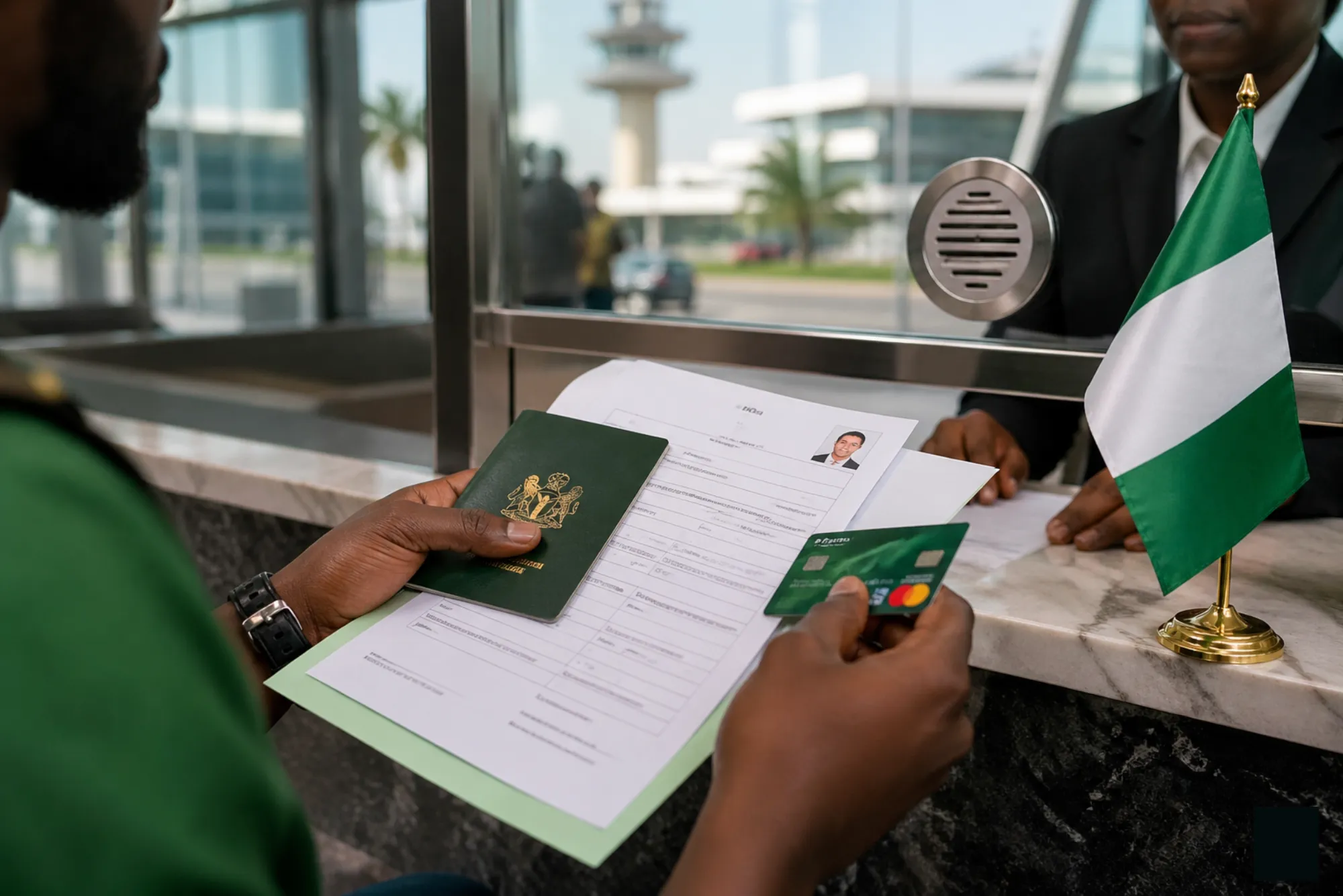
The official Nigeria Immigration Service repeatedly describes the payment step the same way across its eVisa help pages and visa-category pages: apply online, upload the required documents, and pay the visa fee. It also says payment is usually made online with a valid credit or debit card, and that accepted payment methods can vary by portal or country. That is important because it tells applicants that the fee is part of the application flow, not just a number to assume from social media.
Another important official warning is that visa fees are often non-refundable. So even where the public page does not display a fixed price table, the financial risk is still real. A careless error, missing document, or category mistake can turn the application fee into a sunk cost, which is why careful preparation is more valuable than rushing to submit.
Detailed Cost Breakdown: What You Should Budget For
Because the public visa-class pages do not currently show one simple flat fee for every applicant, the best way to build a reliable budget is to separate the confirmed official payment step from the likely supporting costs around it. This creates a realistic picture without inventing numbers that the official source has not published.
- Visa application fee: Paid online during the official application process; exact amount should be confirmed on the official portal.
- Card or portal payment charges: May apply depending on the payment method or country context.
- Document preparation costs: Passport photos, scans, printing, or support documents.
- Travel proof costs: Return ticket booking and accommodation or host details.
- Bank statement and supporting paperwork: Needed for proof of funds in the common short-visit classes.
- Reapplication risk: Important because visa fees are often non-refundable if the application fails or needs to be restarted.
For travelers who want to reduce avoidable loss, timing matters almost as much as paperwork. A strong planning habit is to review application timing, entry rules, and arrival strategy before paying. That is exactly where practical visa timing guidance can support a better application plan.
Nigeria Visit Visa Requirements in 2026
The official requirements differ slightly by category, but the core document pattern is consistent. The eVisa help pages say common documents include a valid passport with at least 6 months’ validity and blank pages, recent passport-size photos, a return ticket or flight booking, accommodation details, and where relevant an invitation letter and Corporate Affairs Commission certificate for business travel. For F6A specifically, the public visa page adds the invitation letter from a family member or friend, a copy of the host’s Nigerian passport or residence permit, hotel reservation or host address, and evidence of sufficient funds such as a 180-day bank statement.
| Requirement | Why It Matters |
|---|---|
| Passport valid for at least 6 months | Core eligibility requirement for short visit visas |
| Passport-size photo | Required for digital visa submission |
| Return ticket or booking | Supports temporary-visit intention |
| Accommodation or host address | Shows where the visitor plans to stay |
| Invitation letter and host documents | Important for F6A visiting visa |
| Proof of sufficient funds | Supports financial readiness for the trip |
Step-by-Step Nigeria Visit Visa Process
The official Nigeria Immigration Service FAQ explains the eVisa process clearly. Applicants go to the official eVisa portal, register an account, choose the correct short-visit visa option, complete the application form, upload required documents, and then pay the visa fee online. Once approved, the applicant receives an eVisa approval letter that includes a QR code and reference number.
- Go to the official Nigeria eVisa portal.
- Create an account or log in.
- Select the correct short-visit visa category.
- Fill in your passport, personal, and travel details carefully.
- Upload the required supporting documents.
- Pay the visa fee online by valid card.
- Wait for the eVisa approval email and keep the approval copy ready for travel.
At the airport or port of entry, the official FAQ says travelers should be ready with a printed or digital copy of the eVisa approval or confirmation, the original passport used for the application, and a landing card. This means the application process does not really end at payment; the final travel documentation also needs to be ready for inspection.
Important Rules That Affect Cost and Planning
Two official rules matter a lot for budgeting. First, all eVisa classes are not extendable beyond their stated duration. Second, short-visit eVisas cannot be converted into residence or work permits inside Nigeria. Together, these rules mean a short visit visa should be treated as exactly that: a short, non-work, time-limited entry permission. Trying to use it as a shortcut to a longer stay can create both cost and compliance problems.
This also explains why selecting the correct category at the start is so important. A visitor who actually needs a longer-term or work-related route should not focus only on the shortest and cheapest short-stay option, because the wrong category can create a failed trip, a rejected application, or a second application cost later.
Frequently Asked Questions
How much is the Nigeria visit visa in 2026?
The official Nigeria Immigration Service public visit-visa pages confirm that applicants must pay visa fees online, but those public class pages do not display one universal flat fee for all F6A or F5A applicants. The exact payable fee should be confirmed on the official application portal during the application process.
How long can I stay in Nigeria on a single-entry visit visa?
For the commonly used F6A Visiting Visa and F5A Tourism Visa, the official public pages show a stay duration of 30 days within a 90-day visa validity window.
Can I extend a Nigeria eVisa once I enter the country?
No. The Nigeria Immigration Service says all eVisa classes are not extendable beyond their stated duration.
What documents do I need at the airport after approval?
You should be ready with a printed or digital copy of the eVisa approval, the same original passport used for the application, and a landing card.
Are Nigeria visa fees refundable?
The official FAQ says visa fees are often non-refundable, so applicants should check their documents carefully before paying.
Conclusion
Nigeria visit visa pricing in 2026 should be understood as a combination of confirmed official process and variable payable amount. The Nigeria Immigration Service clearly confirms that short-visit applicants apply online, upload documents, pay visa fees, and travel with an approval letter, but its public F6A and F5A pages do not show one simple flat fee for every applicant. What is clearly confirmed is the visa structure: 90-day validity, 30-day stay for the main single-entry short-visit classes, no extension, and online payment through the official route.
The safest budget approach is to treat the visa fee as something to verify at the official application stage, while separately planning for document preparation, return travel proof, accommodation or host paperwork, and the risk of non-refundable payment. That approach gives you a more accurate total cost picture and a much better chance of a smooth Nigeria visit visa application in 2026.
Related Reading: Oman Visit Visa Price in India in 2026: Total Cost, Fees & Process
Related Reading: Philippines Visit Visa Price in 2026: Visa Charges and Fee Guide — full guide