Introduction
Flying with a dog or cat can be much easier when you have the right carrier. The challenge is finding a carrier that fits beneath the airplane seat without making your pet uncomfortable.
The best airline approved pet carriers are not simply products with an “airline approved” label. Airlines have their own rules for carrier dimensions, ventilation, pet size, and under-seat storage. The aircraft you fly on can also affect the available space.
The Federal Aviation Administration explains that airlines decide whether pets can travel in the passenger cabin. When permitted, the pet carrier is treated as carry-on baggage and must remain properly stowed under the seat during taxi, takeoff, and landing.
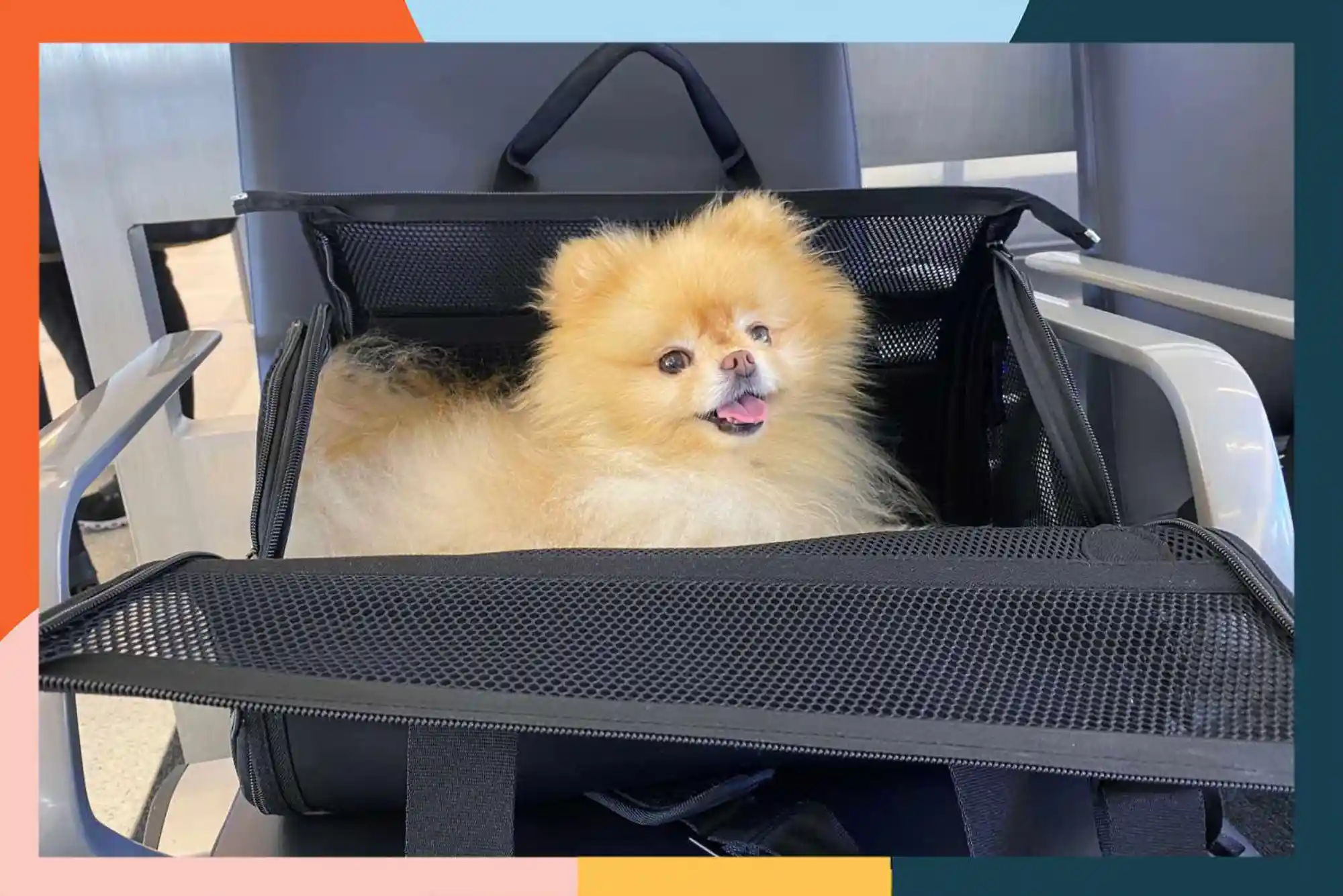
For most travelers, a soft-sided carrier is the most practical choice. It can provide ventilation while offering some flexibility when placed under a seat. However, flexibility should never mean crushing the carrier around your pet.
This guide explains what to look for in airline approved pet carriers, how under-seat sizing works, and which popular designs are worth considering.
What Makes Airline Approved Pet Carriers Suitable for Flights?
There is no universal certification that makes one pet carrier acceptable on every airline. In practice, an airline approved pet carrier means a carrier that meets the requirements of the airline operating your flight.

That distinction matters.
The International Air Transport Association provides guidance for dogs and cats traveling in the cabin, but IATA does not certify or endorse individual commercial carrier brands. Airlines can also impose requirements that are more restrictive than general industry guidance.
A suitable cabin carrier should allow your pet to remain safely enclosed while providing adequate ventilation. Your pet should also have enough room to sit, turn around, and lie naturally within the carrier.
The carrier needs to fit completely under the seat in front of you. It must not block access to the aircraft aisle or interfere with required cabin safety procedures.
For that reason, the phrase “airline approved” should never replace checking your specific airline’s current rules.
Why Under-Seat Fit Matters So Much
Under-seat space is usually the biggest limitation when choosing airline approved pet carriers.
Many major U.S. airlines use dimensions close to 18 × 11 × 11 inches for soft-sided pet carriers, although requirements vary by airline and aircraft. American Airlines, for example, currently lists 18 × 11 × 11 inches for soft-sided carriers. It also states that the carrier must fit beneath the seat without excessive collapsing.
That does not mean an 18 × 11 × 11-inch carrier will automatically fit every airplane seat.
Seat configurations can differ between aircraft types. Some premium seats may have limited or no under-seat storage. Certain bulkhead and emergency-exit seats can also be unavailable for passengers traveling with pets.
This is why experienced pet travelers check the aircraft and seat assignment before buying a carrier.
A carrier can meet a published maximum dimension and still be unsuitable for a particular seat.
Soft-Sided vs. Hard-Sided Pet Carriers
For most in-cabin flights, soft-sided airline approved pet carriers are more practical than rigid kennels.
Soft carriers can flex slightly when placed underneath the seat. This can make a significant difference when the available height is tight. They are also generally lighter and easier to carry through airports.
American Airlines specifically recommends soft-sided collapsible kennels for carry-on pets. Its published requirements include secure construction, padding, water-repellent material, and mesh ventilation on at least three sides.
Hard-sided carriers have advantages in certain situations. They can provide stronger structural protection and are useful for ground transportation or some cargo arrangements. However, their rigid dimensions make them less forgiving under a passenger seat.
For an in-cabin trip, the carrier should be selected around the actual space available rather than simply choosing the largest carrier your pet can fit into.
Sleepypod Air for Flexible Under-Seat Travel
The Sleepypod Air is one of the more sophisticated options among airline approved pet carriers because it is designed specifically around the challenges of cabin travel.
Its published exterior dimensions range from 16 to 22 inches in length, with a width of 10.5 inches and a height of 10.5 inches. The carrier can compress to accommodate different under-seat spaces. Sleepypod recommends it for pets weighing up to 18 pounds.
One particularly useful feature is its four-sided mesh ventilation. The carrier also includes a privacy panel, washable bedding, a luggage handle connection, and a safety tether designed to help prevent escapes when the carrier is opened.
The Sleepypod Air also has independent crash-testing credentials for vehicle use. That is a useful advantage for travelers who drive to and from airports, although crash testing should not be confused with airline certification.
Its main drawback is cost. It is positioned as a premium carrier, so budget-conscious travelers may prefer a simpler soft-sided design.
SturdiBag Pro for Flexible Height
The SturdiBag Pro is another option worth considering when under-seat flexibility is a priority.
Its design uses flexible support rods that allow the carrier to adjust to tighter spaces. Manufacturer-published dimensions vary by size, with smaller versions designed to provide a lower profile for cabin travel.
This type of construction can be useful because airplane seats are not designed around standardized pet-carrier dimensions.
However, flexibility has limits. A carrier should never be compressed so severely that ventilation is restricted or your pet cannot sit and reposition comfortably.
The correct size therefore depends on both the airline’s rules and your pet’s body measurements.
Sherpa Original Deluxe for Everyday Cabin Travel
The Sherpa Original Deluxe is another familiar name in the soft-sided travel-carrier market.
Its spring-wire frame allows portions of the carrier to compress, which can help with under-seat storage. The design also emphasizes mesh ventilation, secure closures, and a water-resistant base.
Sherpa has also offered a “Guaranteed On Board” program for certain domestic flights, although its own conditions make clear that airline requirements still matter. A manufacturer guarantee should never be interpreted as universal approval from every airline.
For travelers who want a relatively lightweight carrier without paying premium-carrier prices, this type of traditional soft-sided design can be appealing.
The important point is to choose the correct size for your pet rather than buying the largest available version.
What Size Should an Airline Approved Pet Carrier Be?
There is no single worldwide carrier size.
The correct dimensions depend on your airline, aircraft, seat, route, and pet.
American Airlines currently publishes an 18 × 11 × 11-inch soft-sided carrier guideline. Its rules also state that the pet must fit comfortably inside the closed carrier.
Other airlines publish different dimensions. Some have particularly restrictive height requirements.
This is why measuring only the length of the carrier can lead to problems. Height is often the dimension that causes difficulty beneath airplane seats.
Before purchasing, measure the carrier’s actual exterior dimensions. Do not rely solely on a manufacturer’s description saying that a product is “airline approved.”
Also remember that expandable carriers can have different dimensions when fully opened and when compressed. Ask your airline whether it permits that type of carrier and whether the carrier must remain within the published dimensions while under the seat.
How to Measure Your Pet for a Flight Carrier
Choosing the carrier starts with measuring your pet rather than measuring your suitcase.
Your dog or cat should be able to sit upright, turn around, and lie down naturally inside the carrier. IATA guidance emphasizes these basic comfort and positioning requirements for dogs and cats traveling in the cabin.
Measure your pet while standing naturally.
For length, measure from the nose toward the base of the tail. For height, measure from the floor to the top of the head or the highest relevant point. Width should account for the widest part of the animal.
Do not select a carrier solely because your pet’s weight falls below its advertised maximum.
Two pets can weigh the same while having completely different body shapes.
A long, slender cat may need a different internal shape from a compact dog of the same weight.
Ventilation Is Just as Important as Size
A carrier that fits perfectly but provides poor airflow is not a good cabin carrier.
Look for large mesh panels that allow air to circulate around the enclosure. Ventilation should remain available even after the carrier is placed under the seat.
IATA’s cabin guidance emphasizes adequate ventilation and warns that the limited space beneath an aircraft seat can create practical challenges.
Four-sided ventilation can provide an additional margin of airflow. The Sleepypod Air, for example, uses breathable mesh on four sides.
Mesh should also be strong enough to resist scratching and chewing. A nervous pet may behave differently at an airport than it does at home.
Security Features to Look For
Airports are stressful environments for animals.
A carrier should have reliable zippers or closures that your pet cannot easily push open. An internal tether can also be useful when the carrier is opened during security screening, although it should be used according to the manufacturer’s instructions.
A waterproof or water-resistant base is another practical feature.
Accidents can happen during long journeys, especially when pets are nervous. A removable washable pad makes cleanup much easier.
A firm bottom can also help your pet feel more stable when the carrier is lifted or moved through an airport.
How to Make Your Pet Comfortable Before Flying
Even the best airline approved pet carriers cannot solve every travel problem if your pet has never used one before.
Introduce the carrier well before your departure date.
Leave it open at home and allow your pet to investigate it voluntarily. Place familiar bedding inside and gradually encourage your pet to spend longer periods inside.
Short practice trips can also help.
If your pet only enters the carrier for veterinary appointments, it may associate the carrier with stress. Using it casually at home can help create a more familiar environment.
For anxious pets, speak with a veterinarian before travel rather than experimenting with medication on the day of the flight.
Airline Rules Can Change by Aircraft
One of the most important lessons when choosing airline approved pet carriers is that airline rules are not always uniform across every flight.
The same airline may have different restrictions depending on aircraft configuration or cabin.
The FAA specifically advises travelers to contact their airline about its current policies because airlines decide whether pets are permitted in the cabin and establish additional procedures.
American Airlines, for example, has different carrier requirements for some hard-sided kennels depending on whether the flight is operated by its mainline aircraft or American Eagle. Certain aircraft and premium-cabin configurations may also have restrictions because of limited under-seat storage.
That makes your booking details just as important as the carrier itself.
Common Mistakes When Buying Airline Approved Pet Carriers
One common mistake is trusting the phrase “airline approved” without checking the airline’s own website.
Another is buying based only on pet weight.
Weight matters, but physical dimensions are equally important. Your pet must fit comfortably while the carrier must fit beneath the seat.
Buying an oversized expandable carrier can also create problems. A bag may look excellent at home but become difficult to position once the airplane seat limits its height.
Travelers should also avoid assuming that a carrier accepted on one airline will automatically be accepted on another.
The safest approach is simple: check the airline, check the aircraft, measure your pet, and then choose the carrier.
International Flights Require Extra Planning
International pet travel can involve much more than selecting airline approved pet carriers.
The destination country may have vaccination, identification, health-certificate, import, or quarantine requirements. IATA advises travelers to check both airline requirements and the regulations of the countries involved in the journey.
The U.S. Department of Transportation also notes that international destinations may require health certificates and can have quarantine rules.
If you have a connecting itinerary, check every airline involved.
A carrier that works for the first flight may not meet the requirements for the second carrier.
Choosing the Right Airline Approved Pet Carrier
Finding the right airline approved pet carriers is less about finding a magical “approved” label and more about matching three things: your pet, your carrier, and your airline.
A good carrier should fit under the seat, provide strong ventilation, secure your pet, and allow enough room for comfortable movement. Soft-sided models are often practical because they can adapt to limited under-seat space.
Premium options such as the Sleepypod Air offer sophisticated features and flexible dimensions, while carriers such as the SturdiBag Pro and Sherpa Original Deluxe provide alternative approaches to cabin travel.
Most importantly, check your airline’s current rules before purchasing. Airline policies, aircraft configurations, and pet restrictions can change.
FAQs
What size pet carrier is allowed on an airplane?
There is no universal size. Many U.S. airlines use dimensions around 18 × 11 × 11 inches for soft-sided carriers, but exact limits vary. American Airlines currently publishes 18 × 11 × 11 inches for soft-sided carry-on pet carriers.
Can I take a soft pet carrier on a plane?
Yes. Soft-sided carriers are commonly used for in-cabin pet travel. They can provide flexibility when placed beneath the seat. However, the carrier must satisfy the specific airline’s requirements and remain properly stowed throughout the required portions of the flight.
What is the best airline approved pet carrier for a small dog?
The answer depends on your airline, aircraft, and dog’s measurements. The Sleepypod Air is a premium option designed to compress for under-seat travel, while flexible soft-sided designs such as the SturdiBag and Sherpa Original Deluxe can suit travelers looking for different combinations of flexibility, weight, and price.
Can a dog sleep in a carrier under an airplane seat?
A dog can remain in its carrier during a flight when the airline permits cabin pet travel and requires the carrier to stay under the seat. The carrier should provide enough room for the dog to lie naturally without restricting ventilation.
Do airlines actually check pet carrier size?
Airlines can enforce their carrier requirements at the airport. The FAA requires an in-cabin pet container to fit beneath the seat without blocking access to the aisle and requires it to remain properly stowed during taxi, takeoff, and landing.
Is a hard or soft carrier better for flying?
For many in-cabin travelers, a soft-sided carrier is more practical because it can flex slightly beneath the seat. A hard-sided carrier can be useful for other forms of transportation, but its rigid dimensions may make under-seat placement more difficult.
How do I know if my pet carrier will fit under the airplane seat?
Check your airline’s current maximum dimensions and compare them with the carrier’s actual exterior measurements. Also verify the aircraft and seat because under-seat storage can vary between configurations.