Introduction
Traveling with your dog can turn an ordinary car ride into a fun adventure. However, an unrestrained dog can become a serious safety risk during sudden braking, sharp turns, or a collision. That is why choosing reliable dog seat belts and crash-tested car hammocks matters for responsible pet owners.
A proper restraint can reduce unnecessary movement and help keep your dog away from the front seats, dashboard, doors, and other passengers. But not every product advertised as “crash-tested” provides the same level of protection. The testing method, attachment system, harness design, weight rating, and installation all matter.
The Center for Pet Safety (CPS) independently tests pet travel products and maintains a certification program for products that meet its safety requirements. Its certified products include safety harnesses, carriers, and travel crates.
This guide explains what to look for in dog seat belts and crash-tested car hammocks, how the two products work together, and which features deserve the most attention when preparing your dog’s backseat setup.
Why Dog Seat Belts Matter for Backseat Safety
Dogs naturally move around when they are inside a vehicle. Some stand between seats, climb toward the windows, or try to reach their owners. Although these behaviors may seem harmless during a short trip, they can become dangerous when the vehicle stops suddenly.
An unrestrained dog can be thrown forward during a collision. The animal can also collide with passengers or become injured by interior parts of the vehicle.

A properly designed restraint limits this movement. More importantly, a restraint should connect the dog to a system designed specifically for crash protection rather than simply preventing the dog from wandering around the cabin.
This distinction is important because a product can control movement without necessarily providing meaningful crash protection.
The Center for Pet Safety warns that extension tethers can create excessive movement during a crash. According to CPS, this can produce severe forces on the dog’s body and may contribute to spinal and orthopedic injuries.
For that reason, shoppers should look beyond phrases such as “heavy duty,” “strong,” or “car safe.”
What Makes a Dog Seat Belt Crash-Tested?
The term “crash-tested” is frequently used in pet-product marketing, but it does not automatically mean a product has passed an independent safety certification.
True crash testing involves controlled conditions designed to evaluate how a restraint behaves during sudden deceleration. CPS, for example, uses established testing protocols and specialized crash-test dogs rather than live animals. Its earlier automotive restraint research used a specially constructed 55-pound test dog and controlled sled testing based on Federal Motor Vehicle Safety Standard 213 conditions.
Independent certification adds another layer of credibility because the product is evaluated against defined requirements rather than relying solely on the manufacturer’s own claims.
The CPS Certified program states that participating manufacturers agree to meet independently developed safety standards, monitor product quality, and make a commitment to accurate marketing.
Therefore, when shopping for dog seat belts and crash-tested car hammocks, look for specific information about who performed the test, what was tested, which size was tested, and whether the product actually passed.
Dog Seat Belts vs. Car Hammocks: What Is the Difference?
A dog seat belt and a car hammock perform different jobs.
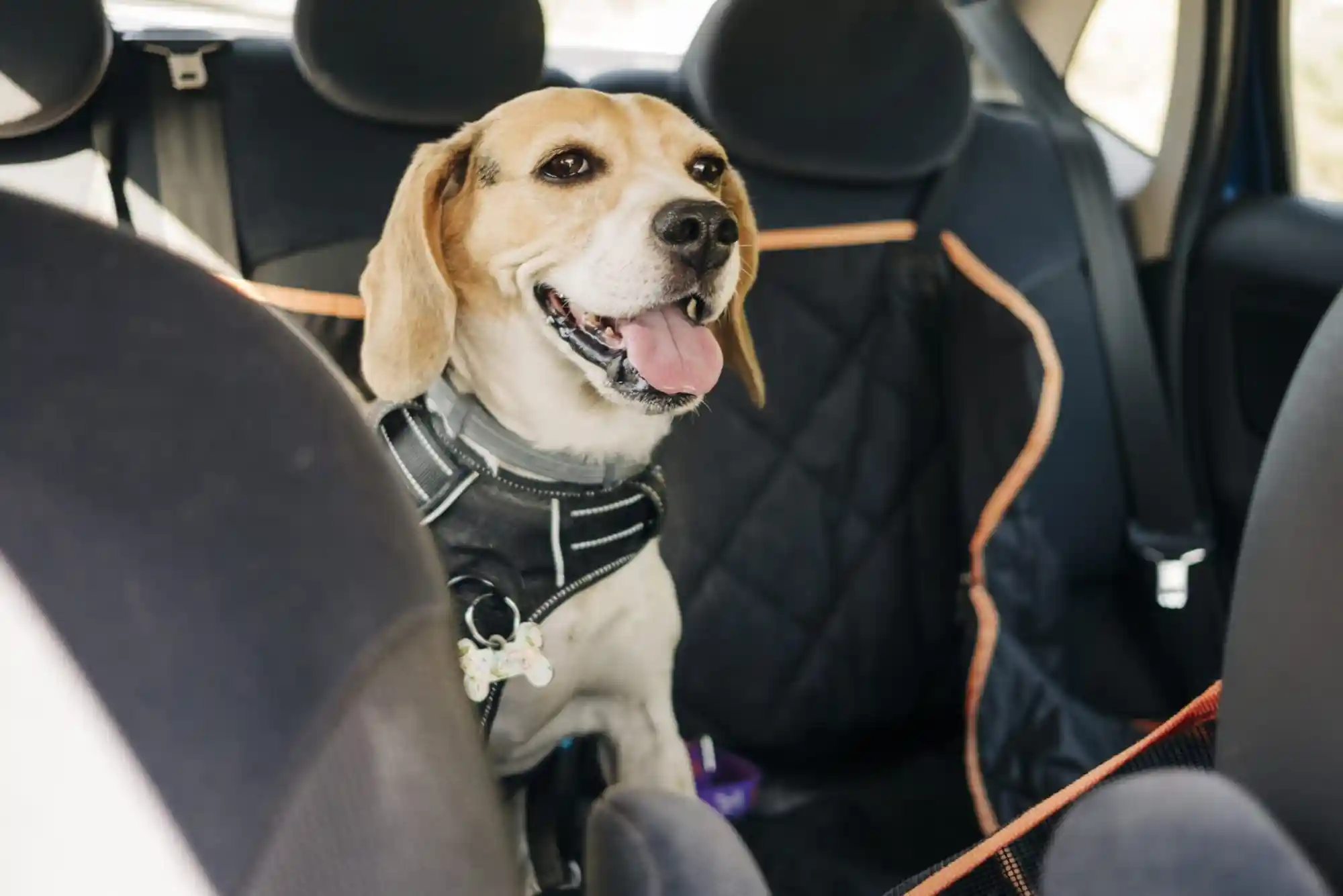
A dog seat belt or crash-tested harness is intended to restrain the dog. Depending on the design, the harness connects with the vehicle’s seat belt system or another approved attachment method.
A car hammock is primarily a backseat barrier and protective cover. It stretches between the front and rear headrests, creating a hammock-like surface across the backseat. This can prevent a dog from slipping into the footwell and can protect seats from hair, mud, scratches, and accidents.
The important point is that a hammock should not automatically be treated as a crash restraint.
A hammock may improve everyday travel comfort and help prevent a dog from moving around the cabin, but its presence does not mean the dog is safely restrained in a collision. The safest setup depends on using a properly tested restraint together with a compatible seat cover or hammock.
This distinction is especially important because some hammocks are marketed using broad safety language without providing independent crash-test evidence.
Can a Car Hammock Replace a Dog Seat Belt?
Generally, a hammock should not be considered a replacement for a crash-tested restraint.
Think of the hammock as the surface around the restraint rather than the restraint itself. It can create a more comfortable and contained backseat environment, but it does not necessarily stop a dog from being propelled forward during a serious collision.
For everyday driving, a hammock can be useful because it prevents dogs from falling into the space between the seat and front footwell. It also provides a more stable area for dogs that become nervous when standing directly on a smooth seat.
However, crash protection requires careful attention to how the dog’s body is restrained.
Car and Driver’s 2026 pet-safety testing coverage similarly emphasizes that restraint effectiveness depends on correct attachment and installation. It also notes that harnesses and carriers have different compatibility requirements depending on the vehicle and restraint design.
What to Look for in the Best Dog Seat Belts
When comparing dog seat belts and crash-tested car hammocks, start with the restraint rather than the appearance.
A strong harness should distribute crash forces across appropriate areas of the dog’s body instead of concentrating force around the neck. Fit is equally important. A restraint that is too loose may allow excessive movement, while an incorrectly sized harness may not perform as intended.
Independent testing is another major consideration. For example, the Sleepypod Clickit range is listed by the Center for Pet Safety as CPS Certified. CPS records show that the range passed testing in November 2022 and received a five-star rating under its stated test protocol.
That does not mean every product from the same brand or every accessory is automatically certified. Certification should be checked for the specific product and configuration you intend to use.
Owners should also pay attention to weight limits. A harness tested with a large crash-test dog should not automatically be assumed to perform identically for every smaller or larger dog.
Why Extension Tethers Can Be a Problem
One of the most important details many shoppers overlook is the difference between a short, approved restraint connection and an extension tether.
An extension tether gives the dog additional freedom to move. That may sound comfortable, but excessive movement can increase the distance the dog travels before being stopped.
CPS specifically warns against extension tethers and says they can undermine the crash-protection claims of a harness. Its safety guidance recommends using a CPS Certified harness, crate, or carrier and avoiding extension tethers or zipline-style systems.
This is a good example of why a longer tether is not necessarily a safer tether.
The goal is not simply to keep your dog attached to the vehicle. The goal is to use a restraint system designed to manage movement and forces during a crash.
How a Dog Hammock Can Improve Everyday Backseat Travel
Although a hammock should not replace a crash-tested restraint, it can make the backseat environment more practical.
A good hammock creates a broad surface that covers the seat and extends toward the front seatbacks. This can help stop dogs from slipping into the footwell when the car turns or stops.
It can also reduce distractions. A dog that cannot easily climb into the front cabin is less likely to interfere with the driver.
Another benefit is cleanliness. Waterproof or water-resistant materials can protect upholstery from wet paws, dirt, drool, and shedding.
For families who regularly travel with dogs, a hammock can therefore work as a complementary accessory. The restraint provides controlled movement, while the hammock provides containment, comfort, and seat protection.
How to Install Dog Seat Belts Correctly
Even a well-tested product cannot provide its intended protection if it is installed incorrectly.
Start by reading the manufacturer’s instructions carefully. Confirm the correct harness size and adjust every strap so the harness sits securely without restricting normal breathing or movement.
Next, check how the restraint is supposed to connect to the vehicle. Do not substitute a random carabiner, leash, extension strap, or aftermarket connector unless the manufacturer specifically approves it.
The dog’s position also matters. The back seat is generally preferable to allowing a dog to ride loose in the front passenger area. Car and Driver’s pet safety guidance recommends appropriate second-row positioning for carriers and emphasizes checking vehicle compatibility before installation.
Finally, inspect the restraint regularly. Look for frayed webbing, damaged stitching, broken buckles, worn clips, or other signs of deterioration.
Best Setup for Long Road Trips
Long journeys require more than simply attaching a harness.
Your dog should have enough room to sit, lie down, and reposition comfortably while remaining appropriately restrained. Before a long trip, take several shorter drives using the new setup.
This helps your dog become comfortable with the harness and allows you to identify problems before traveling hundreds of miles.
A washable hammock can make the experience more comfortable, especially for dogs that shed heavily or get carsick. However, make sure the hammock does not interfere with the restraint or seat belt system.
It is also sensible to stop periodically on long journeys. Give your dog an opportunity to drink water, stretch, and relieve itself in a safe location.
Common Mistakes Dog Owners Make
One common mistake is attaching a restraint to a collar instead of an appropriate body harness. Another is assuming that any seat-belt-style tether is crash-tested simply because the packaging uses the word “safety.”
Another problem is purchasing a restraint based only on customer reviews. Reviews can tell you about comfort, durability, and ease of installation, but they do not replace controlled crash testing.
Using an extension tether is another concern. CPS specifically advises against these products because of the additional movement they can allow during a collision.
Finally, avoid combining products without checking compatibility. A harness, tether, hammock, seat cover, and vehicle seat belt may each work individually but create problems when combined incorrectly.
Are Crash-Tested Dog Seat Belts Worth It?
For owners who regularly travel with their dogs, investing in a properly tested restraint can provide an important layer of protection.
The key is to distinguish between genuine independent testing and general marketing language. CPS maintains a public database of certified products and publishes safety research so consumers can investigate specific products before purchasing.
Cost should certainly be considered, but so should construction, fit, certification, compatibility, and intended use.
A cheaper product that has not been independently tested is not necessarily equivalent to a certified restraint simply because both use similar-looking straps and buckles.
For maximum practicality, many owners can use a crash-tested harness together with a properly fitted backseat hammock. The two products serve different purposes and can complement one another when used according to their instructions.
How to Choose the Right Setup for Your Dog
The right setup depends on your dog’s size, behavior, body shape, travel habits, and vehicle.
A small dog may have different restraint requirements from a large breed. A calm dog that lies down throughout a journey may need a different setup from an active dog that constantly tries to move around.
Your vehicle matters, too. Check the owner’s manual and restraint manufacturer’s instructions before connecting anything to seat belts, anchors, or headrests.
Most importantly, prioritize independently verified crash performance over attractive designs or exaggerated marketing claims.
The Center for Pet Safety provides a searchable collection of certified pet products and testing results, making it a useful starting point when researching dog seat belts and crash-tested car hammocks.
FAQs
What is the safest way for a dog to ride in a car?
The safest approach depends on the dog’s size and the vehicle, but the dog should not travel loose. A properly fitted, independently tested harness, carrier, or crate can provide controlled restraint. The Center for Pet Safety recommends certified restraints and advises against extension tethers.
Are dog seat belts actually safe?
A properly designed and independently tested dog restraint can provide meaningful crash protection. However, not every product sold as a dog seat belt has undergone the same testing. Check the specific product’s testing credentials, fit requirements, and installation instructions before relying on it.
Are dog car hammocks safe in an accident?
A car hammock can help contain a dog and protect the vehicle’s seats, but a hammock should not automatically be considered a crash-tested restraint. For collision protection, use a restraint specifically designed and tested for that purpose.
Should a dog wear a harness or collar in the car?
A properly designed travel harness is generally more appropriate for connecting a dog to a vehicle restraint than attaching a restraint directly to a collar. The harness should fit correctly and be intended for vehicle travel.
Can I use a dog seat belt with a car hammock?
Yes, they can be used together when they are compatible. The hammock can provide a comfortable and protective surface, while the harness and restraint control the dog’s movement. Make sure the hammock does not interfere with the vehicle’s seat belt or the restraint’s intended attachment method.
What should I avoid when buying a dog car restraint?
Avoid relying solely on terms such as “heavy duty,” “strong,” or “crash tested.” Look for specific testing information and independent certification where available. Also avoid extension tethers that allow excessive movement, which CPS specifically warns against.
Can a dog sit in the front seat with a seat belt?
The back seat is generally the better location for a restrained dog. Front-seat airbags are designed for human passengers and can create additional hazards for animals during a crash. Always follow your vehicle and restraint manufacturer’s safety instructions.
Choosing between dog seat belts and crash-tested car hammocks should not come down to appearance or marketing alone. The most important factors are independent testing, correct fit, secure installation, appropriate restraint design, and compatibility with your vehicle.
A quality hammock can make the backseat cleaner and more comfortable while helping prevent your dog from falling into the footwell. A properly tested harness or restraint serves the more important job of controlling your dog’s movement during sudden braking or a collision.